Ambiguity
Since I was a young teenager, I have had the habit of reading the last page of a book before I start from the beginning. Why? One- I like to see if I like the writing. If it’s bad, I won’t start the book. 2- I watched “When Harry Met Sally” as a young teen (12/13) and Harry does the same. He reasons, “When I buy a new nook, I always read the last page first. That way, in case I die before I finish it, I know how it ends.” While this is supposed to be comical and in contrast to Sally’s practical character, the thought does bring up an important aspect of humanness: we don’t like what is unknown or uncertain. We don’t like ambiguity. My friend says she used to practice the same habit when she read romance novels because she wanted to know who ended up together—if it wasn’t the couple she wanted, she wouldn’t read the book.

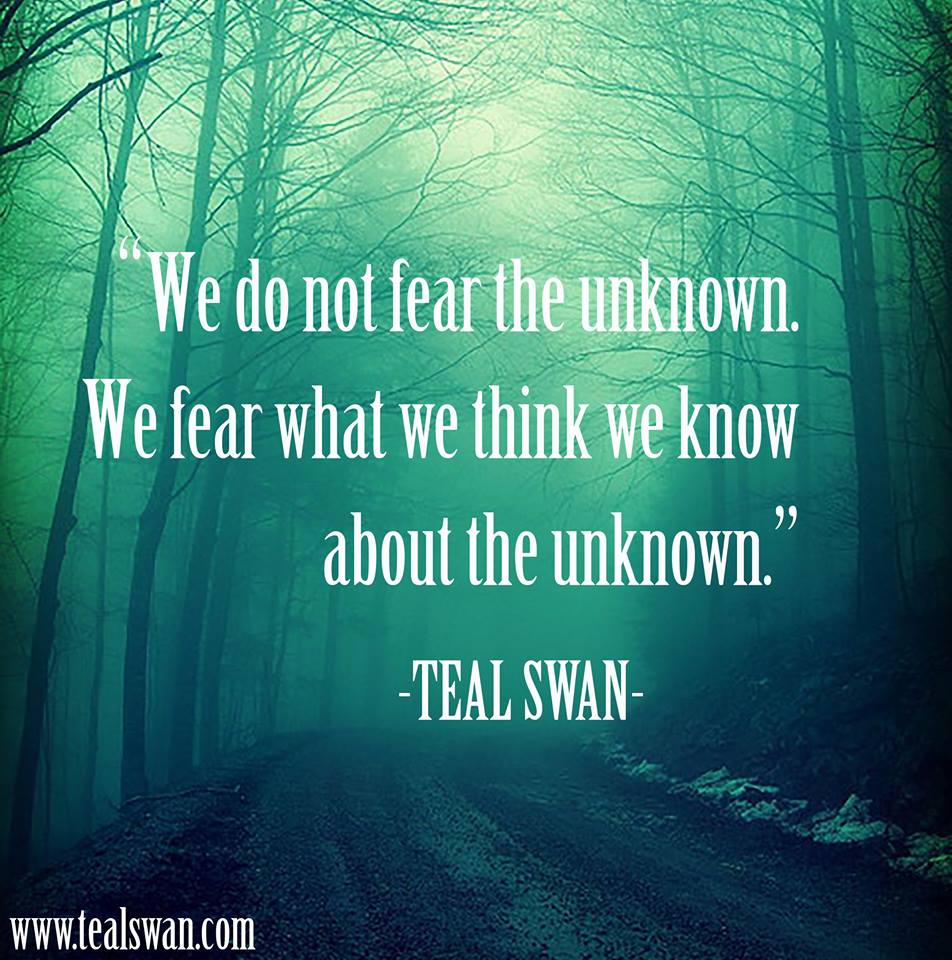
The truth of life is that it’s uncertain, and we don’t know the end, and we can’t know the end. Life is full of not-knowing. We must learn to navigate the unknown the best we know how to do so. We can thrive during times of uncertainty in an ever-changing world. During these times, we must change our mindset of the unknown from anxiety-inducing to one of possibility. Change must be embraced when you face the abyss of life’s inevitable unknowns. You need to have confidence you will make it to the other side. Because you will. You have before. One way or another. Everything always works out how it’s meant to. The fear of the unknown causes inaction rather than moving forward—we get frozen and don’t decide, so we are still facing the unknown. If we act, where it turns out the way we want to it to our not, at least we know.
Easier said than done! When we’re in the moment, the world feels like it is our is going to come crashing down around us. Neuroscience research has found uncertainty arises from a) ambiguous inputs, b) internal noise, c) external noise, d) insufficient information, and e) imperfect information processing. These areas can be adjusted to help us navigate uncertain times better, allowing us to thrive in uncertainty, rather than flounder in anxiety (Walker 26). When you experience uncertainty, first ask yourself where the uncertainty is coming from. Once you’ve discovered the source, you can know how to adjust. Remember: you can’t solve everything at once, and you won’t.
AMBIGUOUS INPUTS
- Delayed responses, mixed signals, questions about relationships
This type of ambiguity feels threatening and causes you to question yourself and the situation. You overthink things, and you become trapped inside your own head. Ambiguous inputs can cause worst-case scenario spiraling and negative thoughts. Your negative biases should be addressed. You can reinterpret this negative thinking by questioning your first reaction to a situation. When something isn’t known, your first impression may be more negative than the situation warrants. Give your brain time to consider other explanations. Look for more positive possibilities. Ask yourself: “what else could this mean?” Remember: everything will be fine.
EXTERNAL NOISE
- threats to environment, war, global catastrophe, AI taking over the world (basically everything on the news).
It’s important to be informed, but you must know where your information comes from. You must be able to trust your news sources. Be weary of being constantly forewarned. Reduce the noise. If something is distracting to you, remove it if you can. Filter out what you need to know and what’s most important to you and direct your attention toward relevant information. You may need to change your scenery. Take a social medial respite. Take time to meditate and quiet your brain to focus.
INTERNAL NOISE
- life worries, sadnesses, disappointments
Internal noise can make uncertainty feel worse. Sarinopoulos et al (2010) found a majority og people who dealt with uncertainty mispredicted bad things would happen then when they did not. When your brain overwhelms you, find some way to lessen the internal noise and lighten the overwhelm you feel. Remind your brain it is a natural, negative exaggerator Positive self-talk is key. Instead of doomsday thinking, implement positive anticipation==create something in your day, week, month, or year you can look forward to.
INFUCCICIENT INFORMATION
- the future, job situations, the government, relationships
The human brain thinks in probabilities, not possibilities. We need to change that thinking. Stop trying to predict things in unpredictable situations or environments. Visualize what you want and keep your desire ever-present in your mind. Let your commitments determine your reality—not the opposite. We like to have control over our lives nut often cannot. Switch your mindset from control to observation. Rather than trying to control what you cannot. Humans have less control over life than we want or can have. Use your inner resources. Observe situations and then respond instead of reacting to them.
IMPERFECT PROCESSING
- incorrect or unknown thinking or limited resources
Accept rather than worry about how your thinking is not perfect. No one has perfect thinking. You don’t and can’t know everything. Think of the pressure you would experience if you did! Acceptance can help your brain become unstuck or caught up in pain, reduce the strength with which your brain systems are involved in attention, emotion, and self-focused thinking converging on it (Aytur, S.A. et al, 2021). When you feel like you don’t know, it’s time to question your assumptions. Don’t rely on your first assumption, snap-judgment, or initial response. Do not validate what you already believe. Question the idea that you will not get what you want. Again, choose to think positively. Use positive self-talk to tell yourself the opposite of your worry/anxiety/fear. Use self-compassion. We are our own biggest critics, but we should be our own greatest cheerleaders. Recognize your self-criticism and answer it with kindness, understanding, and grace. Self-compassion interrupts self-criticism. Tell yourself struggle and imperfection are part of the human experience. As I always say: not even Mary Poppins was perfect. She was practically perfect!
You may not have to use all these strategies at once, and you don’t need to. If you did, you could overwhelm your brain to the other extreme. It is vital to identify the source of ambiguity. How is your thinking impacting the situation? Is the situation ambiguous or is the ambiguity caused by your observations? Is the noise you hear internal or external? Do you need more information? If so, where can you obtain the information. Might your own thinking need adjusting? Identify the source and then observe its impact. Your goal is not to eliminate uncertainty—you won’t, you can’t. It’s impossible. The goal is to become better at coping with uncertainty as it arises. Doing so will take a concerted effort on your part. If you make the effort, you will have less worry and anxiety. Unknown situations will have more positive outcomes in the future, even if the outcome isn’t what you want.

About The Author
