Time
Time is an interesting concept. Various dictionaries have defined time as follows: the indefinite continued progress of existence and events in the past, present and future regarded as a whole (Oxford Dictionary); the measured or measurable period during which an action, process or condition exists or continues (Webster’s Collegiate Dictionary), but how does one actually define time? In the words of a song by Chicago, “Does anybody really know what time is?/ Does anybody care?” (Does Anybody Really Know What Time Is?). Time is familiar to almost everyone on the planet, yet it is one of the hardest concepts to define and understand. Science, philosophy, religion, the arts, and culture have different definitions of time, but how it’s measured is relatively the same. Clocks are measured in seconds, minutes, and hours—these can be traced back to ancient Sumeria, but they have not always been the same—they have altered slightly through time. The modern international unit of time, the second, is defined by the electronic transition of the censium atom. Physicists define time as the progression of events from the past to the present into the future. Basically, if a system is unchanging, it is timeless. Time can be considered to be the fourth dimension of reality, used to describe events in three-dimensional space. It is not something we can see, touch, or taste, but we can measure its passage.
Our brains are built to perceive time, but things like drugs and neurotransmitters in the brain can impact our perception. If a chemical excites the brain’s neurons, they fire more quickly, while decreased neuron firing slows down time perception. Scientists at Baylor College of Medicine in Houston say the brain doesn’t actually speed up, but the amygdala becomes more active. The amygdala is the region of the brain that makes memories. As more memories form, time seems drawn out. Basically, when time seems to speed up, the brain distinguishes more events within an interval. In this respect, time truly does seem to fly when we are having fun. Time seems to slow down during emergencies or danger.
Many of us (especially if we live in Western society) see time as a linear event—seconds, minutes, hours, days, months, etc. Every culture has its way of trying to make sense of time. We live in a Western Culture, so we see the concept of time from that perspective. We don’t take the time to see how other cultures view time—we just assume our way of thinking is the right way of thinking. (This is a very Western way of thinking, too). We think of time having a beginning—birth, an end—death, and the path forward is somewhat unknown, even though we usually have a plan for it.
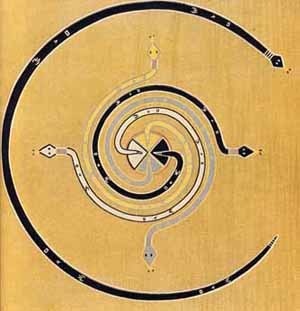
When I was earning my Masters in English, I took a course in Native American Literature. The Native American concept of time is more circular—it ebbs and flows—there is no real beginning or end. Native Americans believe time is what we perceive: what is, what has been, and what will be. Each day the sun rises and sets, the seasons follow one another, the heavenly bodies revolve around us, people grow old and die, but their children reconstitute the process. Instead of viewing life as a line, what would happen if we viewed time as a spiral? Life would be more related to nature, seen more as viewing a year as scenery, and trying to harmonize with it.
Southern Europeans are multi-active, rather than linear-active. The more things they can do at the same time, the happier and the more fulfilled they feel. Multi-active people are not very interested in schedules or punctuality. They pretend to observe them, especially if a linear-active partner or colleague insists on it, but they consider the present reality to be more important than appointments. In their ordering of things, priority is given to the relative thrill or significance of each meeting.
If you really think about it, time is a manmade construct. Who decided what equals a second, a minute, an hour, a day, a month? Hundreds of years ago days use to be only 18 hours—while the planets may be moving more slowly, who decided the amount of time it takes the planets move, and at what speed? Humans didn’t start recording time until about 30,000 years ago when they recognized the regular movements of the sun and stars. In this sense, recording time has been the human way of recording the progress of civilization.
Who decided death was the end? What if it’s the beginning of something else? What if it’s just a moment—a brief breath in the thing we call life? What if our loved ones never leave us, but their reality is circling our own? When I was in Junior High, my Grandma Teri took me to the Minnesota History Center on one of our many adventures. The Center contains a library—I have always loved the library. She allowed me to pick out a book she would buy. I chose, for whatever reason (I think the smell), a book entitled Racing the Sun by Paul Pitts. The book tells the story of Brandon, a Navajo American teenager, who has assimilated to the American way of life—until his Navajo Grandfather comes to stay in his home—in his room. Brandon learns the value of his history and the culture—our connection to each other. I loved reading that book in junior high, and it sits on my bookshelf. It reminds me of the connection I have with my Grandma Teri. She’s gone, but she’s with me always. I hope when I pass along the book to the special kids in my life, they get the same feelings reading it I did—they will feel my special connection with them.

This connection to our ancestors is what makes me believe in the recent resurgence of sites like youandme.com and ancestry.com. People want to know where and who they came from—what their past tells them about themselves. Because I don’t know my biological father’s history, I did take a DNA test from ancestry.com. After receiving the results. I found a little more where my ancestors came from, and now, I get hints about who potential ancestors might be. I don’t know much about my family history, so this tool is helping me piece it together little by little. I will admit: in the LDS Church genealogy is a huge activity, but I always considered it a must-do; now it feels more like a want to do.
Many cultures believe in a connection with our ancestors. Death is not an absolute, but a step we must all take in life. Our souls are eternal and have no end. Some cultures believe in reincarnation. This view of eternal life allows for death not to be grieved, but for the loved ones’ life to be viewed with happiness. Moving on to the next life should be celebrated. As the Dalai Lama said: “Old friends pass away, new friends appear. It is just like the days. An old day passes, a new day arrives. The important thing is to make it meaningful: a meaningful friend – or a meaningful day.”
What about cultures that don’t know about the existence of time at all? They live each moment in the moment. They don’t live in the past or in the future. They live in the now. That’s all they know. We often don’t think about time as it influences us. Have you ever considered what life would be like if the past was the future? If time flowed opposite of how we perceive it does? Because we can’t envision it, does that mean it’s not possible?
Not only is the past, present and future viewed differently in different cultures, time itself is as well. When I went to Greece, I was amazed at how differently the people treated their time. They sleep in, don’t really care about being late, and they do things when they want to. As an American, this was hard for me to adjust to—I was used to being up early, being on time, and having stores be open when their posted hours said they were going to be open. My co-worker Bella, who is from Africa, says she runs on African time, which means she is always 15 minutes late. I’ve noticed other cultures live life slowly—they don’t rush and rush like we Americans do. For us, time is money; for them, time is for enjoyment. According to Lienhard Research Group, “Anthropologists list the toughest things to cope with in a foreign land. Second only to language is the way we deal with time” Pace of life matters—it matters where you live, and it impacts how you live your life.
Time leaves us with so many questions and so few answers. Scientifically, time began with the Big Bang, but would a new Big Bang create a new time? Is time travel possible, or is it just fiction? No matter how you look at it, time is precious. Time is fleeting. Time can be seen positively or negatively. How much does memory impact our perception of time? Many scientists believe memory formation is the basis for human perception of time.
Our fascination with time is apparent when you hear how evident it is in so much of our lives: books, movies, music, etc. We celebrate the passage of time with birthdays, anniversaries, and holidays. How you spend your time is up to you. Exploring the beliefs and stories which are part of other cultures can show us a great deal about how other people view time and its beginnings.

About The Author
