Endurance
Growing up in a religious environment I was taught “endure to end,” and if you did, you would gain eternal life. I was taught to keep faithful—no matter what—through good times and bad, even when things seemed impossible. This meant no matter what happens in life people should look to Jesus Christ, and He will sustain you. In summary, the Bible says that to endure we must make our lives all about finding joy in Christ, seeking to glorify God in all things, including our seasons of sickness. Sounds easy, right? But what are we enduring? How are we enduring? When is the end?

I don’t know about most people, but when I hear the word endure, it does not conjure positive thoughts/ideas. In fact, the encyclopedic definition includes these keywords: continuing, long-lasting, faith, hope, suffer patiently, and remain in existence. Not all negative, but not all positive either. Enduring is about stamina: putting one foot in front of the other, even when it seems like we can’t go on. Yet, neither the religious or worldly definition gives much clarity of what enduring really means.
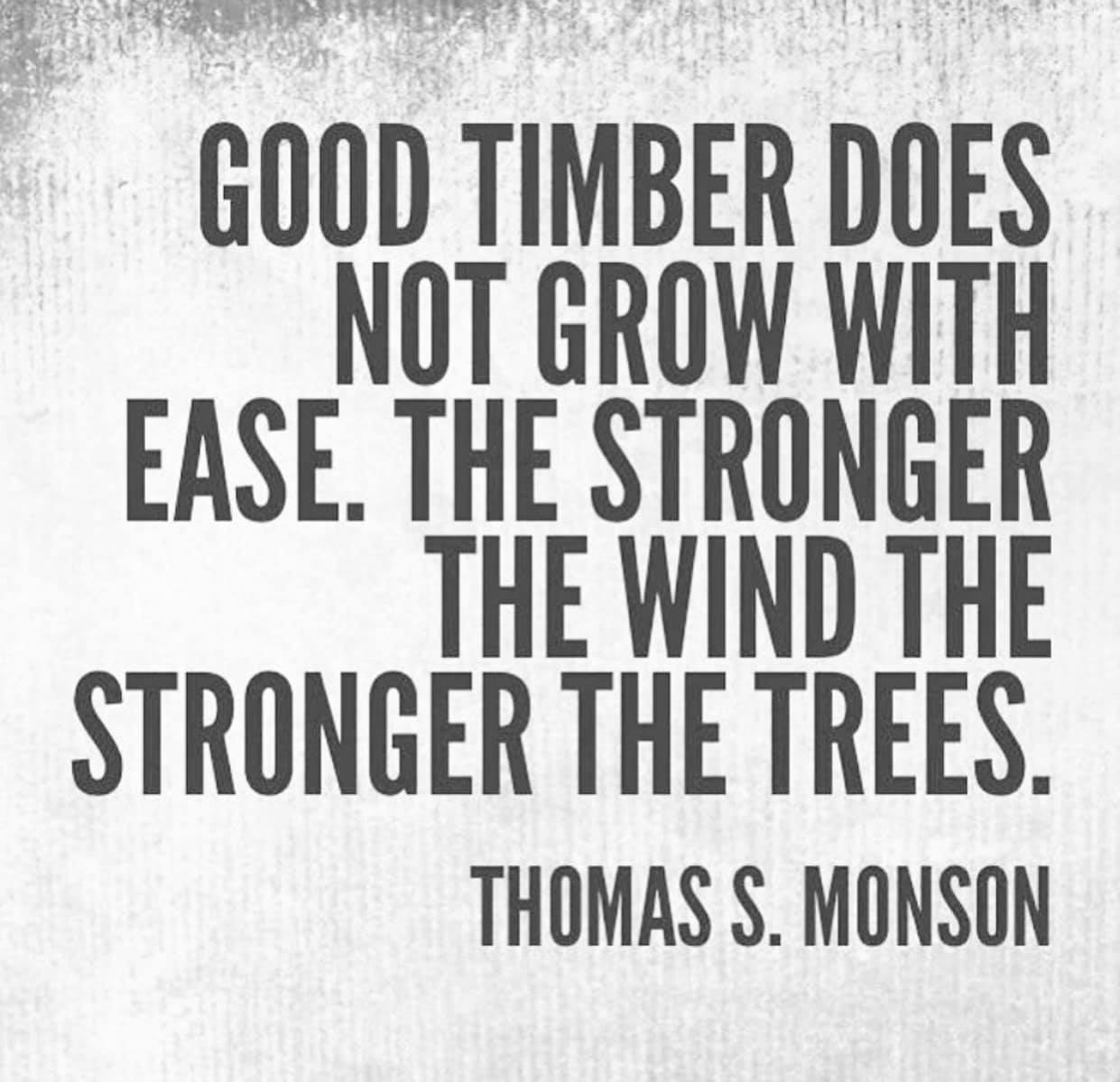
When people think of enduring, they think of endurance. Marathons. Working Out. Endurance is defined as, “the ability to withstand hardship or adversity;” “the act or an instance of enduring or suffering;” “permanence; duration.” I like these explanations better. They are more positive than the religious definitions. Yet my favorite may be: “Endurance is the ability of an organism to exert itself and remain active for a long period of time, as well as its ability to resist, withstand, recover from, and have immunity to trauma, wounds, or fatigue. It is usually used in aerobic or anaerobic exercise.” This definition requires activity—not to just sit by and let life happen to us. We face life, and we face it head on. We resist the negative. We recover. We come out stronger. That’s the most important part—we endure and become stronger. Enduring strengthens us.
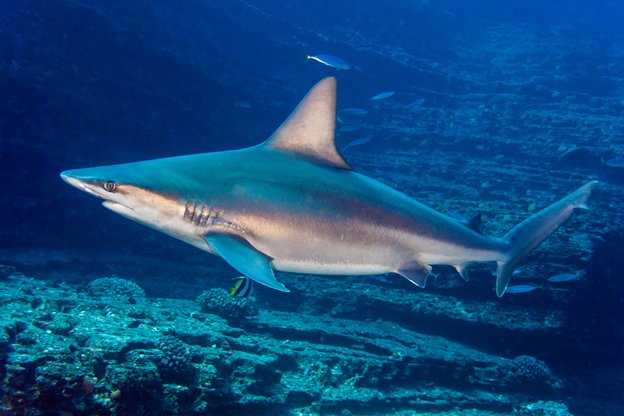
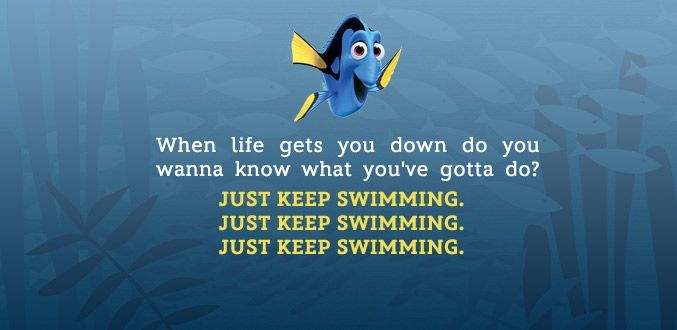
If you know me well, you know I am fascinated by sharks. But, even if you know me well, you may not know the origin of this fascination. Sharks have to move to receive oxygen in their gills; otherwise they will die. While some sharks have built-in bodily systems to help them survive if they stop swimming, they can’t stop swimming for long. They can rest on the bottom of the ocean. Sharks do have to swim to avoid sinking to the bottom of the water—aquarium or ocean. The faster sharks swim, the more water is pushed through their gills. If they stop swimming, they stop receiving oxygen. They move or die. When I began my PhD studies, I decided I was going to be active for the entirety of my study. I decided I was going to be a shark—I would never stop working until I finished, or I would die (in the educational sense of the word). So, “just keep swimming became my mantra.” Every time I accomplished a goal along m PhD journey, I rewarded myself with something shark. Mostly stuffed animals. I have 10 in all. I have adopted 2 sharks. I tried to swim with them in Florida. The idea is when I have my own office one day, I will have a tank full of sharks, and when students come to my office and ask why, I can tell them why they always need to continue on their educational journey. If they need a reminder, a shark will always be in my office to help them.
I have never been one to shy away from a challenge. In fact, if you tell me I can’t do something, I will do it, just to prove you wrong. I have done some crazy things that people have told me I couldn’t do—graduated college (5 times–call me an overachiever), chugged a 40, shotgunned a root beer, hit a homerun in baseball, shot a gun, jumped off a high dive, etc. I have been blessed because I was not born with a spirit of fear. If I want to do something, I usually do it. Sometimes, I convince myself to do things that cause me to tremble, but I have never not done something out of fear.
But, enduring is another story. It’s a struggle for me.
Most of the time, sporting events are related to enduring. After all, an endurance event is, “A sports activity by individual—i.e., non-team—athletes in which key muscles are exercised at submaximal intensity for prolonged periods of time. Examples: Swimming, wrestling, weightlifting, cycling, cross-country skiing, race walking.” Athletes act individually. While they probably train with other people, they cannot accomplish the goal on their own. They act in intensity–they better their bodies, craft their skills. Endurance activities take their entire body; they are intense, and they are prolonged. What if we treat enduring life like athletes who participate in these activities treat their endurance? We can ask others to help us, but ultimately, the journey is our own. Face our struggles with resilience and intensity, and using our entire bodies to do so. Strengthen our bodies and our skills (strengthen the mind). They accomplish big feats. We too can accomplish big feats.
Life is not easy for anyone. Since March 2020, we all have experienced Covid. We have all been impacted by it. No one has had the same experiences. In October 2020, many countries reported an increase in “pandemic fatigue” – people feeling demotivated about following recommended behaviors to protect themselves and others from the virus. Reports showed pandemic fatigue evolves gradually over time and is affected by the cultural, social, structural and legislative environment. This pandemic time has been extremely hard for me. Even though I do not consider myself a people-person, not seeing people’s faces has been hard. I miss seeing responses when I smile at someone in passing. I have empathy for others, even if I don’t always like them. Life has been hard for everyone, and we don’t always know how hard.
During this time, people have struggled to get things done they wouldn’t normally struggle with. One of these things was exercise. People were locked out of gyms. It was hard to stay fit when people couldn’t be around others with the same goals. Even though I was used to working out at home (thanks to 4 years of PhD studies), I still struggled to find motivation to exercise during the pandemic—especially arm day. I hate arm day. Most days I forced myself to work out. I lost weight and became healthier. I am a goal setter—because if I set goals, I will accomplish them (my sister recently told me, “you can really get through anything and achieve anything you set a goal of. I love that about you.”). When the pandemic began, I weighed 145, I wanted to weigh 138. Now, 16 months later, I weigh 122 and have lost about 1% of BMI–that achievement makes me the happiest. Now, my goal is to maintain. Some days are a struggle. Twice last week I did my ab workouts while lying in bed. I didn’t want to work out, but I did. I taught myself to belly dance, which was a struggle. I worked at it, but I never stopped working at it. Now, I can do a belly dance routine (I will toot my horn for this one, but I still work at it). Last month, I set a goal to walk 212 miles. I struggled. Especially on Sundays. By the end of the month, I had walked 213 miles, gained speed, felt accomplished, and I felt proud. In July, my goal is to walk 310 miles. Once I achieve a goal, I set a new one to keep improving myself.
I can do hard things. We can all do hard things. Recently, my 2021 theme song has played at moments when I needed to hear it– “I’m Still Standing”–https://www.youtube.com/watch?v=ZHwVBirqD2s. No matter what has happened in my life, I’m still standing.
I also recently listened to one of my favorite songs called “Tell Me A Story.” The lyrics include, “Tell you a story and it starts with time / Moves to how you live and learn how to die / Another phase in this world that brings deaths to life…Scared of what’s behind and scared of what’s in front / Live with what you have now and make the best of what’s to come.” That’s one of the keys to enduring: to live in the moment. You can’t change the past. And you can’t look to the future. My Uncle John always says, “you can’t wish thing to be different.” I have been thinking about that a lot recently. I can wish for things to be different, but the truth is, they are not different. I have to deal with how it is as it is.
For instance, in my gut I feel like God told me I was going to marry someone (almost 3 years ago). At the time, he and I were casually seeing each other. The revelation frightened and excited me. With him, I acted out of fear. Instead of allowing him into my life, I pushed him away. I did things I can’t change. I believe I hurt him, and I hurt myself in the guise of protecting myself. The thing is, all this time later, situations are different, yet I still feel the same. I could wish all day that things were different, but the truth is, they are not. I have to live with how things are, not how I wish them to be. I am not sure what to do about it—it’s something I fight within myself about. Part of me wants to walk away. In my gut, I feel like the time is just not right, and I have to endure with patience until the timing is right. It’s not easy or fun, and it’s not something I share with other people. I endure life privately. Most people do. So, we should always be kind to others because we don’t know what they are enduring.
I always thought I was patient. That is, until I got my PhD—then I realized when I want something, I want it quickly. This revelation is no different. I want it, so I want it quickly. But, I keep feeling I have to wait. So, I will have to learn to endure. What can I learn from this experience? I have decided while I am waiting, I am going to make myself a better person—I am going to be the best Morgan I can be. I am learning new skills, and I am trying new patience techniques. Recently, I bought a journal in which I have written down manifestations, and I am meditating on them. I may not be able to change the way things are, but I don’t just have to let life happen to me. In the end, if my gut feeling happens to be wrong, I will be a better person than I was when I started.
While enduring sucks—it’s what we all must do. I don’t have the answers to how or why, but I know we all must face situations in life which are not easy—those situations cause us to have to move forward through pain, heartache, suffering, etc. The good news is that we don’t have to do those things totally on our own—we have friends/family to help us along the journey. As I have endured, I have learned more about enduring:
- Each day is a new day, and if we fail Tuesday, we can begin again Wednesday. We can always start over.
- Endurance is matter over mind. I recently saw a meme that said “the heaviest burdens we carry are the thoughts in our head.” #truth. All too often, we convince ourselves we can’t do something, we can really do. Naturally, it is human instinct to go to our fight or flight response, the worst-case Defense mechanisms. We protect ourselves from hurt and pain. If we don’t face a problem, it can’t hurt us. If we plan for the worst, it can only be better than what we planned for, and if the worst happens, we’ve planned for it.
- Endurance is a roller coaster of emotions—pride, joy, triumph, heartache, sadness, etc.
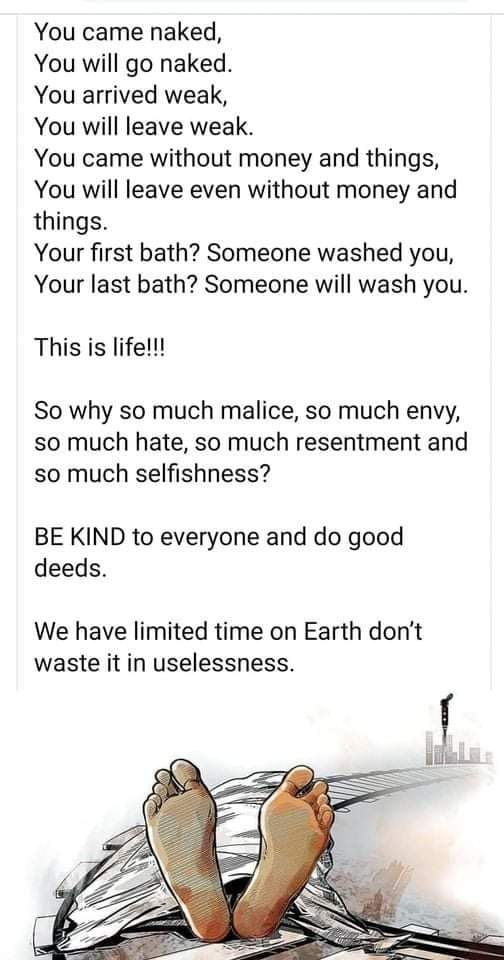
- Endurance teaches us empathy. As we endure, we learn how to treat ourselves with more kindness, which can help us be kinder to others.
- Life is painful; it hurts; it sucks, in the end, you can only live each day for what it is, and wake up to try to do your best. Then wake up day-after-day and do it again. Facing our life day by day will help us overcome everything. It’s easier to face a day than a week or a month or a year or a lifetime. As the saying goes, “it’s easier to eat an elephant one day at a time.” It’s easier to endure one day at a time.
In the words of John Michael Montgomery, “life’s a dance / you learn as you go.” That’s the best we can ask for, to learn as we go—to come out of life better than when we entered it. Maybe, just maybe, that’s what enduring is all about.
About The Author

Thank you Morgan!
This is an inspirational piece for me. Sometimes I forget how to approach a life situation and then you have a way of reminding me with your thoughts!